Ahpra registration PHY0002298174
How these guides are written and reviewed →
A spacer is a clear chamber that clips onto a puffer (pMDI). You fire the puff into the chamber and then breathe it in — so the timing no longer has to be perfect. Spacers get more medicine into the lungs, less onto the throat, and are recommended for almost everyone using a pMDI, especially children, older adults and during a flare-up. A mask version is used for young children or anyone who cannot seal their lips on the mouthpiece.
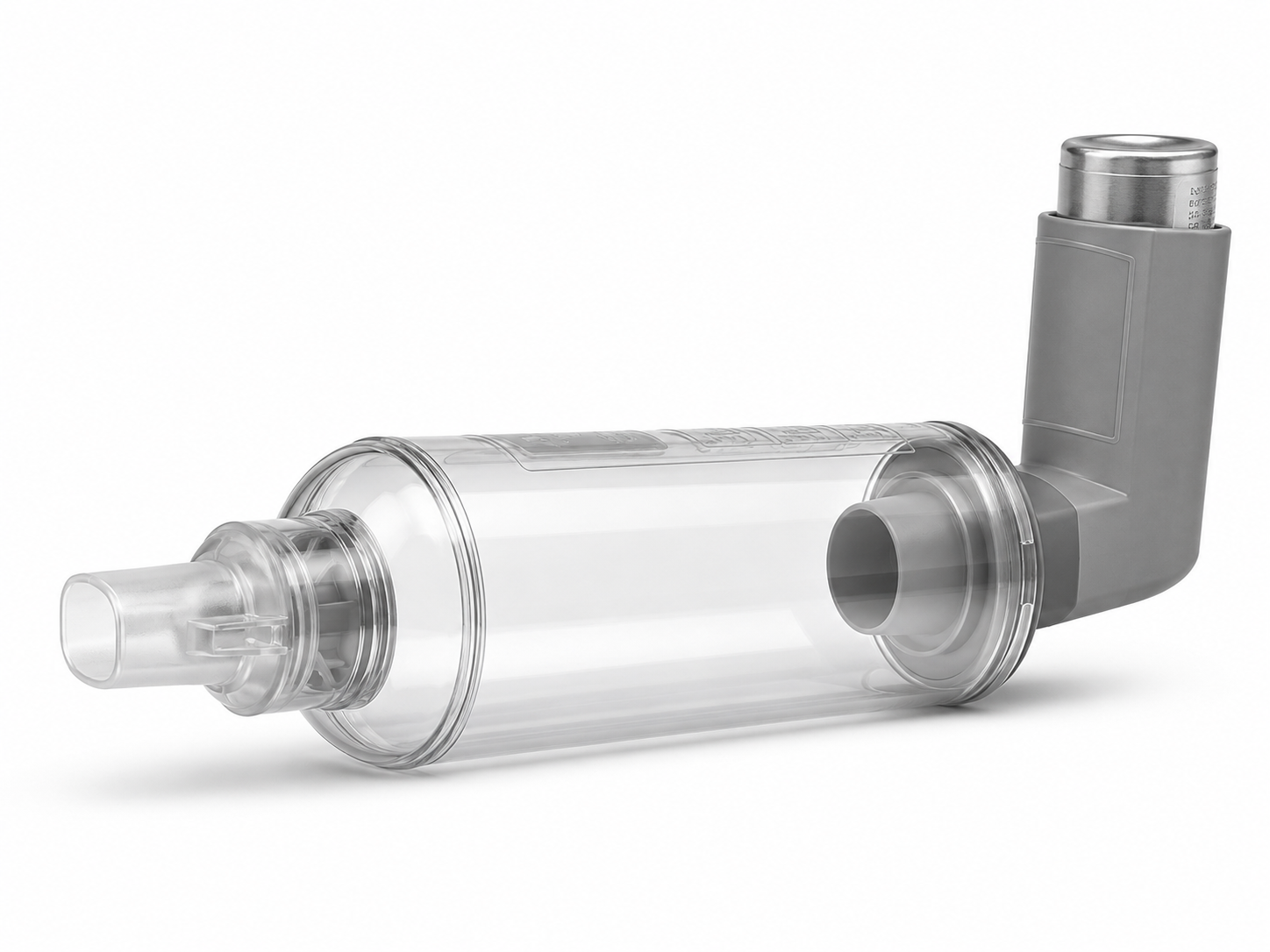
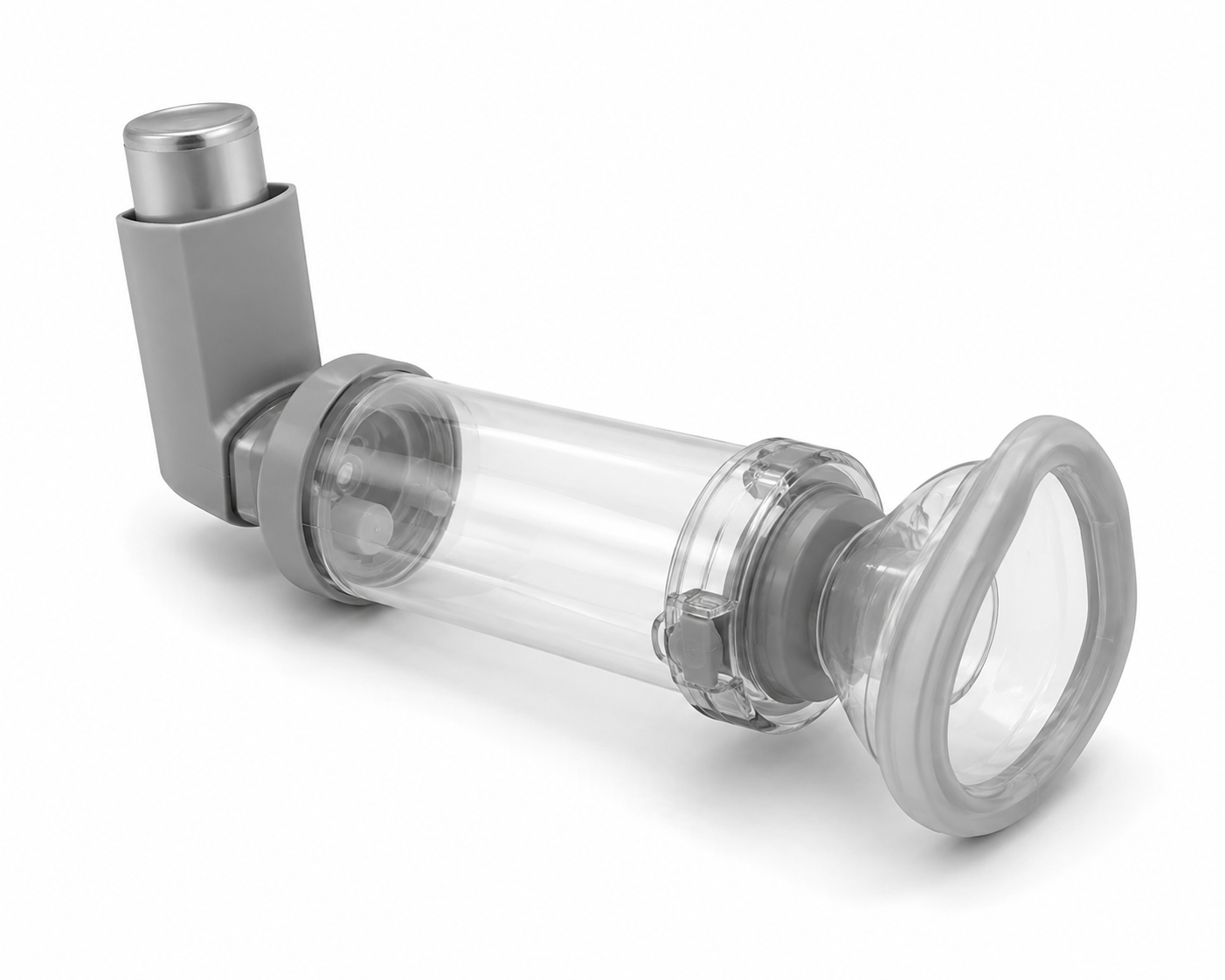
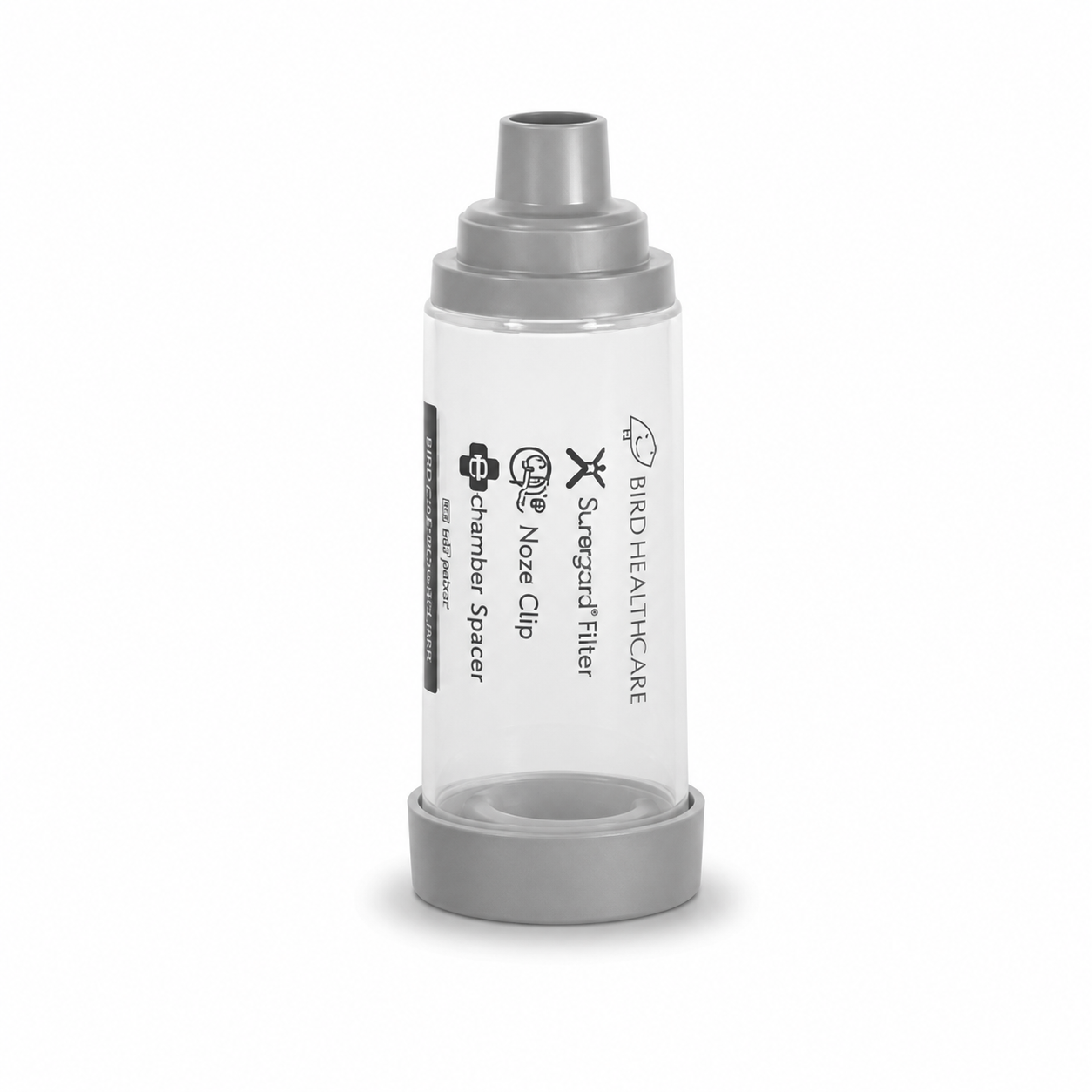
Fire one puff into the spacer and breathe it in before adding the next. Two puffs fired together stick to the chamber walls and to each other, and much of the second dose is lost. Never pre-load a spacer and leave it, and never wash a spacer and use it wet — let it drip dry, or static will hold the medicine to the sides.
Examples of this type
Different medicines come in this device. Common examples include:
- Any pMDI + a spacer
- AeroChamber / Able Spacer
- Volumatic
- La Petite / La Grande
- A compact travel spacer
Brand names are examples only and availability changes — always go by the name on your own inhaler and your prescriber's instructions.
How to use it — step by step
Getting the best from it
- One puff per breath — multiple puffs at once stick to the chamber walls.1,2,3
- Breathe in soon after firing; the mist settles within a couple of seconds.
- With a mask, hold it gently sealed for 6 normal breaths per puff.
Looking after your inhaler
Wash the spacer in warm soapy water about once a month, do not rinse, and let it air-dry (drip-dry) — rubbing creates static that attracts the medicine. Replace as advised, usually every 12 months.
Most people lose some accuracy over time.4,5 We can check your inhaler technique at your appointment.
References & evidence base
- National Asthma Council Australia. Inhaler technique for people with asthma or COPD. Information paper for health professionals. Melbourne: National Asthma Council Australia, 2026.
- Australian Commission on Safety and Quality in Health Care. Inhaler technique — device-specific checklists. Sydney: ACSQHC, 2020.
- Vincken W, Levy ML, Scullion J, et al. Spacer devices for inhaled therapy: why use them, and how? ERJ Open Res 2018;4(2):00065-2018.
Further reading
- Sanchis J, Gich I, Pedersen S; ADMIT Group. Systematic review of errors in inhaler use: has patient technique improved over time? Chest 2016;150(2):394–406.
- Usmani OS, Lavorini F, Marshall J, et al. Critical inhaler errors in asthma and COPD: a systematic review of impact on health outcomes. Respir Res 2018;19(1):10.
References are numbered in citation order (Vancouver/BMJ style) and were current at the time of writing. Always follow the leaflet for your specific device and your prescriber's instructions.
Everything starts with an assessment — your symptoms, breathing, exercise tolerance and daily function measured properly, so what follows is built on your lungs rather than an average.
Corrections: If something on this page is wrong, out of date or unclear, we want to know. Email reception@inspireclinic.au with the page name and what you believe is incorrect. Substantive corrections are made promptly, and the guide’s version and last-updated date are changed to reflect it.