Ahpra registration PHY0002298174
How these guides are written and reviewed →
Breathlessness is the uncomfortable feeling of not being able to get enough air. It is a symptom rather than a disease, and can come from the lungs, the heart, the muscles, anaemia, anxiety or being out of condition — often several of these at once. Finding and treating the underlying cause is the first step. Even when the cause cannot be cured, a lot can be done to ease the feeling: paced breathing, a handheld fan, positions that make breathing easier, staying active and sometimes medication. This page explains why breathlessness happens and the practical ways to manage it.
What helps when you are breathless
Two things are worth knowing before breathlessness next catches you out: a position that lets the breathing muscles work with less effort, and a breathing pattern that slows the rate down. Both are taught and practised in rehabilitation, and both work best when they are already familiar.
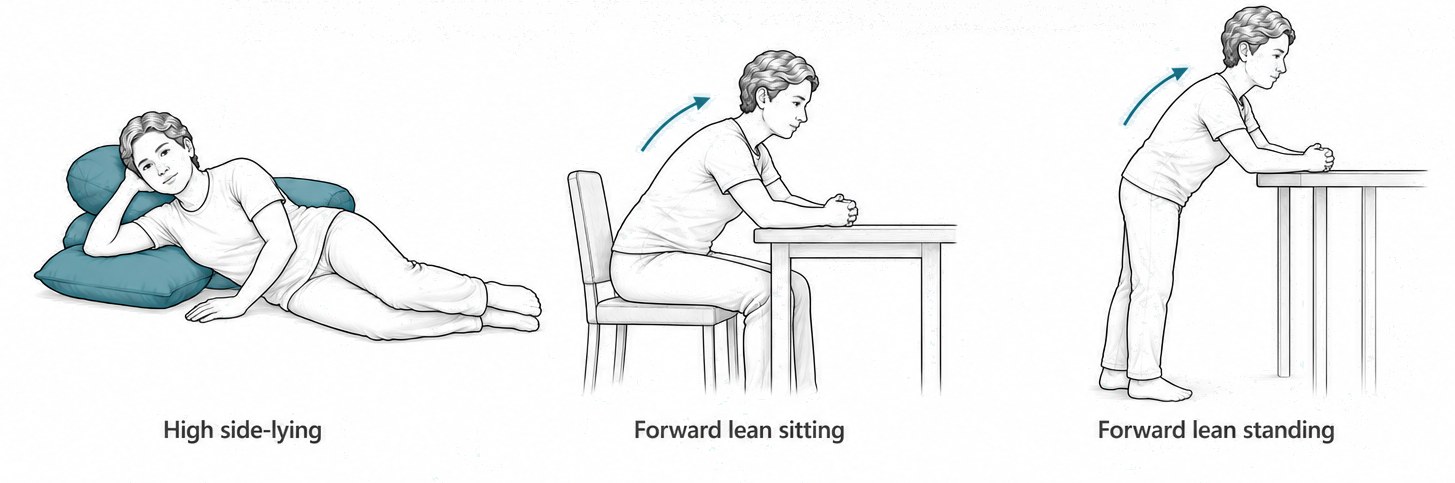
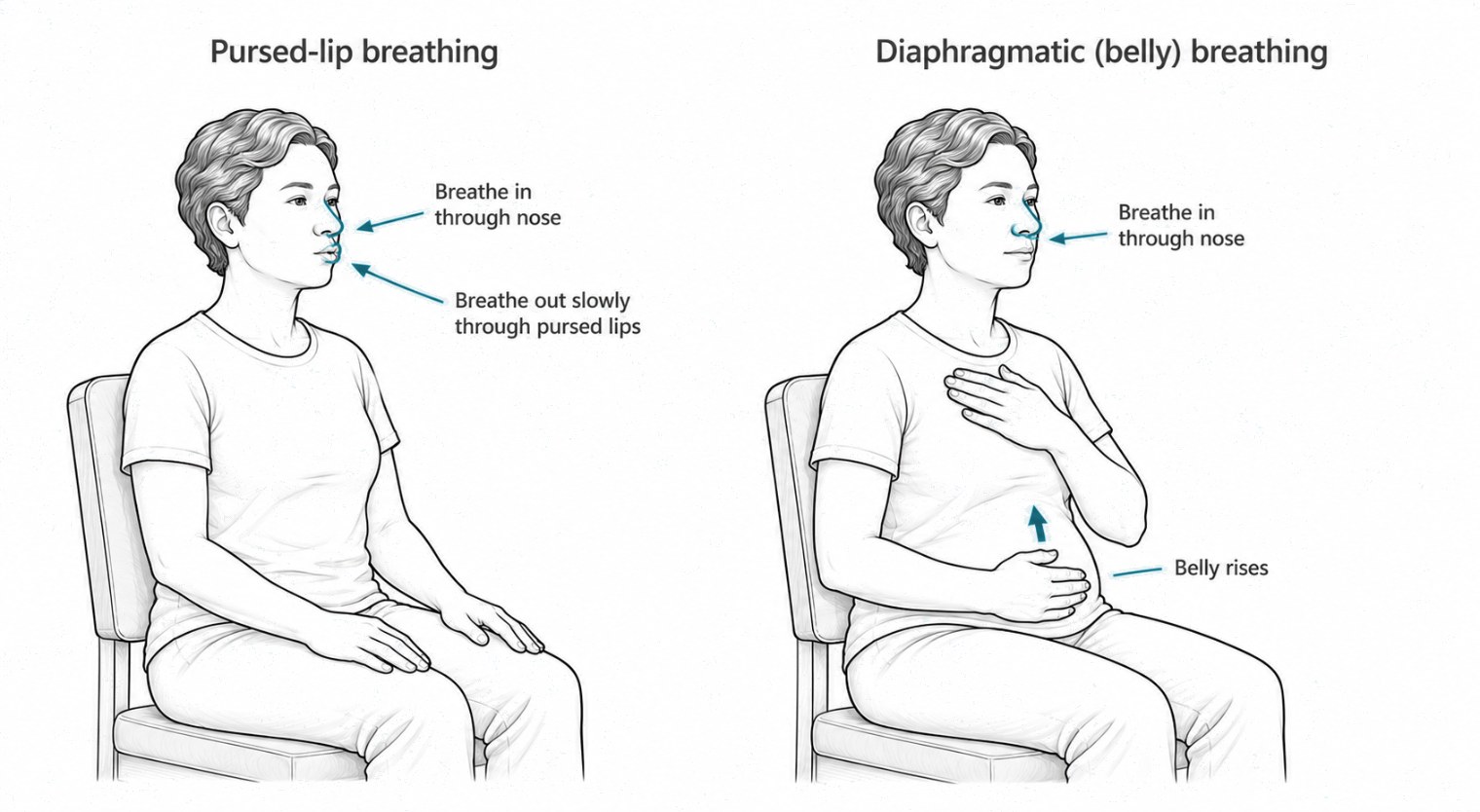
Neither replaces treatment of the underlying cause. See Breathing Retraining for how these are taught and progressed.
Definition
Breathlessness — or dyspnoea — is the subjective experience of breathing discomfort, comprising qualitatively distinct sensations that vary in intensity and are not fully explained by observable physiological measurements. It is a symptom, not a diagnosis, and its severity does not always correlate with the degree of underlying lung or cardiac impairment. This dissociation between measured physiology and perceived breathlessness has important implications: a patient's reported functional limitation is the primary outcome that matters, and treatment must target the symptom as well as the underlying cause.1
Chronic breathlessness is defined as breathlessness that persists despite optimal treatment of all identified contributing conditions. It affects approximately 9–11% of Australian adults and is associated with a functional impact equivalent to severe chronic pain.
Pathophysiology
Your brain compares how hard it asks you to breathe with what your lungs report back. When they don't match, you feel breathless. The mismatch can come from lungs, airways or chest-wall muscles that are more loaded, stiffer or weaker than the brain expects.
Several mechanisms may contribute simultaneously in any individual patient:
Increased drive to breathe: Hypoxaemia (sensed by peripheral chemoreceptors at the carotid body), hypercapnia (sensed centrally), acidaemia, activation of pulmonary J-receptors and C-fibres (by interstitial oedema, inflammation, or tumour), and activation of pulmonary irritant receptors (by bronchoconstriction, smoke, or infection) all increase the respiratory drive, raising the motor command without a proportional increase in ventilation — thereby generating dyspnoea.
Increased mechanical load: Airflow obstruction in chronic obstructive pulmonary disease (COPD) and asthma, reduced lung compliance in interstitial lung disease and pulmonary oedema, hyperinflation with intrinsic positive end-expiratory pressure, and pleural disease all increase the work of breathing, intensifying the mismatch between effort and output.
Respiratory muscle weakness or fatigue: In neuromuscular disease, advanced COPD, cardiac cachexia, and steroid myopathy, the muscles required to generate each breath are weakened, so that greater neural drive is required to produce the same tidal volume — increasing perceived effort without changing ventilation.
Impaired cardiovascular response to exercise: Heart failure reduces cardiac output, limiting oxygen delivery to exercising muscles and producing early lactic acidosis, which in turn drives ventilation disproportionate to workload. Anaemia compounds this through reduced oxygen-carrying capacity.
Central sensitisation and chronic breathlessness syndrome: In patients with persistent breathlessness despite optimised medical therapy, central neurological changes — analogous to central sensitisation in chronic pain — amplify and sustain the perception of breathlessness beyond what would be predicted from peripheral physiology. This has direct therapeutic implications: interventions targeting central processing (opioids, cognitive and behavioural approaches, fan therapy) can produce clinically meaningful relief even without changing lung function or cardiac output.
Breathlessness also has a strong affective dimension — the sense of threat, fear, or distress associated with the sensation — which is processed through limbic and anterior cingulate cortex pathways, anatomically separate from the sensory intensity pathway. This explains the close clinical relationship between breathlessness, anxiety, and depression, and why non-pharmacological interventions that reduce fear and arousal can substantially relieve breathlessness independent of any change in physiology.
Other conditions that often go with it
The co-morbidity profile of breathlessness varies with the underlying cause and is detailed in each condition-specific section. Across conditions, the common pattern is bidirectional amplification: breathlessness produces anxiety, deconditioning, depression, and social withdrawal; and each of these worsens breathlessness in turn.
Prevalence
Dyspnoea is one of the most common presenting symptoms in primary and secondary care and the leading cause of emergency presentation in patients with chronic cardiorespiratory disease. Despite its frequency, breathlessness is consistently under-assessed and under-treated, particularly in its chronic form. Population studies estimate a prevalence of 9–11% for moderate-to-severe chronic breathlessness in Australian adults, rising sharply with age.
Causes and triggers
Respiratory causes:
- COPD and emphysema — the most common cause of progressive exertional dyspnoea in older Australians; breathlessness correlates with hyperinflation more than FEV1
- Asthma — episodic dyspnoea with wheeze, cough and chest tightness; nocturnal and early-morning predominance
- Bronchiectasis — dyspnoea with chronic productive cough and recurrent infections
- Interstitial lung disease and idiopathic pulmonary fibrosis (IPF) — progressive exertional dyspnoea, initially, becoming severe at rest in advanced disease; characteristic velcro crackles at the bases
- Pneumonia and acute respiratory infection — acute onset dyspnoea with fever, cough and constitutional symptoms
- Lung cancer — progressive dyspnoea with haemoptysis, weight loss, and systemic symptoms; or airway obstruction with stridor
- Pleural effusion and pneumothorax — unilateral reduced breath sounds; acute (pneumothorax) or subacute (effusion) onset
- Pulmonary hypertension — exertional dyspnoea often with fatigue, pre-syncope; frequently misdiagnosed
- Pulmonary embolism — acute onset dyspnoea with pleuritic chest pain, tachycardia, and hypoxaemia
- Dysfunctional breathing and inducible laryngeal obstruction — episodic dyspnoea disproportionate to physiological findings; breathing pattern abnormality on assessment
- Obesity hypoventilation syndrome — dyspnoea, hypersomnolence, and awake hypercapnia in obesity
- Diaphragm dysfunction — insidious onset orthopnoea; reduced FVC in supine position; caused by phrenic nerve palsy, post-surgical injury, or neuromuscular disease
Cardiac causes:
- Heart failure (HFrEF and HFpEF) — exertional dyspnoea, orthopnoea, paroxysmal nocturnal dyspnoea, ankle oedema; the single most common cause of dyspnoea in adults over 65
- Ischaemic heart disease and acute coronary syndrome — exertional dyspnoea may be the anginal equivalent, particularly in women and people with diabetes
- Valvular heart disease — particularly aortic stenosis (exertional dyspnoea, angina, syncope) and mitral regurgitation
- Cardiomyopathy — structural; dyspnoea on exertion with signs of cardiac dysfunction
- Atrial fibrillation and other arrhythmias — dyspnoea and palpitations together; rate-related
- Pericardial disease — pericarditis (pleuritic pain + dyspnoea) or tamponade (acute dyspnoea + haemodynamic compromise)
Systemic and other causes:
- Anaemia — dyspnoea proportional to severity and acuity; pallor, tachycardia at rest in severe anaemia; haemoglobin, ferritin, and iron studies are first-line investigations
- Deconditioning — dyspnoea on exertion without resting physiological abnormality; cardiopulmonary exercise testing (CPET) demonstrates a peripheral/deconditioning pattern
- Obesity — increased mechanical load on the respiratory system; reduced FRC; often co-existing obstructive sleep apnoea (OSA) and OHS
- Long COVID and post-viral syndromes — breathlessness with fatigue and post-exertional symptom exacerbation; physiology often near-normal at rest
- postural orthostatic tachycardia syndrome (POTS) and dysautonomia — exertional dyspnoea and palpitations on upright posture; heart rate response out of proportion to effort
- Neuromuscular disease — MND, myopathies, post-polio, cervical spinal cord injury; progressive diaphragm weakness with reduced FVC in supine, impaired cough
- Metabolic acidosis — compensatory hyperventilation; assess in diabetic ketoacidosis, uraemia, and salicylate toxicity
- Thyroid disease — hypothyroidism with pleural effusion and reduced ventilatory drive; hyperthyroidism with high cardiac output and anxiety
- Anxiety and panic disorder — episodic breathlessness with hyperventilation, perioral paraesthesiae, palpitations, derealization; coexists with and amplifies organic dyspnoea
- Refractory breathlessness syndrome — chronic breathlessness persisting despite optimal treatment of all identified contributors; managed as a primary target
Symptoms
The qualitative character of breathlessness provides clinical information about its likely mechanism. "Air hunger" and "can't get enough air" language typically reflects hypercapnia or hypoxaemia. "Chest tightness" or "constriction" is associated with bronchoconstriction. "Work of breathing" or "breathing requires effort" reflects increased mechanical load or muscle weakness. "Breathing is rapid and shallow" reflects restrictive ventilatory patterns. Identifying the dominant descriptor guides investigation and management.
Diagnosis
Why Diagnosis Matters
Systematic assessment of breathlessness identifies its cause in the majority of patients, guides investigation and treatment, and enables quantification of the functional impact on which treatment response should be judged. Failure to assess breathlessness systematically leads to over-investigation in some patients, under-investigation in others, and consistent under-treatment of the symptom itself — particularly in advanced disease where breathlessness is the dominant source of suffering.
How is it Diagnosed?
Clinical history covers: onset (acute, subacute, or insidious progression), time course, pattern (continuous, episodic, nocturnal, positional), exertional threshold (which specific activities now produce breathlessness, what the patient could do previously), associated features (wheeze, cough, sputum, haemoptysis, palpitations, ankle swelling, orthopnoea, paroxysmal nocturnal dyspnoea, fever, weight loss, chest pain), triggers (cold air, exercise, allergens, lying flat, eating, stress), and functional impact (activities now avoided or curtailed). Current medications, prior investigations, and exercise history are essential context.
Physical examination covers: signs of respiratory distress (accessory muscle use, pursed-lip breathing, tracheal position, paradoxical abdominal movement, use of tripod posture), resting breathing pattern (rate, depth, ratio of thoracic to abdominal excursion), resting oxygen saturation, chest expansion and percussion, auscultation (wheeze, crackles, reduced air entry, pleural rub), and cardiovascular signs (raised JVP, heart murmurs, added sounds, peripheral oedema, elevated resting heart rate).
Outcome Measures
The following instruments are used at Inspire Clinic to assess, monitor, and quantify breathlessness:
mMRC Dyspnoea Scale (Medical Research Council): A five-point scale (grades 0–4) grading functional limitation from breathlessness. Grade 0 = breathless only with strenuous exertion. Grade 1 = breathless hurrying on level ground or walking up a hill. Grade 2 = walks slower than peers on level ground because of breathlessness, or has to stop for breath when walking at their own pace on the level. Grade 3 = stops for breath after walking 100 m or after a few minutes. Grade 4 = too breathless to leave the house or breathless when dressing. Simple, widely validated, and used in COPD guidelines — though the guidelines do not agree on where the referral threshold sits. COPD-X refers to pulmonary rehabilitation from mMRC ≥1; GOLD and much international guidance use mMRC ≥2 (or grades 3–5 on the older MRC scale). Both are defensible: the lower threshold catches people while they are still hurrying rather than already slowing down, the higher one targets established limitation. Guidelines are guidance, not a rule — which threshold applies is a clinical decision for the individual patient. Limitation: single dimension, insensitive to acute change.
Borg CR10 Scale (modified Borg 0–10): Used to monitor breathlessness intensity during exercise testing and rehabilitation sessions. Allows real-time exercise prescription based on perceived dyspnoea; the target training stimulus in most pulmonary and cardiac rehabilitation programmes is Borg 3–5 ("moderate to somewhat severe"). The numerical rating scale (NRS 0–10) is an equivalent alternative in clinical and palliative settings.
Baseline Dyspnoea Index (BDI) and Transitional Dyspnoea Index (TDI): Multidimensional instruments that separately assess functional impairment (the tasks the patient can no longer perform), magnitude of task (the exertion level required to produce breathlessness), and magnitude of effort (the breathing effort experienced). The BDI establishes the baseline; the TDI measures change from that baseline. A TDI focal score change of ≥1 unit represents the minimal clinically important difference for most respiratory interventions and is the standard threshold for clinical significance in drug trials.
Multidimensional Dyspnoea Profile (MDP): Assesses the sensory quality (effort, air hunger, chest tightness) and affective distress of breathlessness as separate dimensions. Particularly valuable in chronic breathlessness syndrome, palliative settings, and research contexts where understanding the mechanism of relief (sensory vs affective) is important.
Dyspnoea-12 (D-12): A 12-item questionnaire covering physical (7 items) and affective (5 items) domains. Validated across COPD, heart failure, interstitial lung disease, and cancer; total score out of 36 with a higher score indicating greater impact.
Condition-specific instruments: CAT (COPD Assessment Test — includes breathlessness), ACQ-5 (asthma control including breathlessness), SGRQ (St George's Respiratory Questionnaire — activity and impact including dyspnoea), MLHFQ or KCCQ (heart failure), K-BILD (interstitial lung disease). These are detailed in the condition-specific documents and the Cross-cutting Assessment document.
Palliative and advanced disease settings: Numerical Rating Scale (0–10) assessed at rest, with movement, and during provocation (talking, dressing) is practical and responsive. The Edmonton Symptom Assessment Scale (ESAS) integrates breathlessness with pain, fatigue, nausea, anxiety, and other palliative symptoms in a single instrument.
Investigations
Directed by clinical presentation. A systematic first-line approach includes:
- Chest X-ray (identifies significant cardiorespiratory pathology in the majority of cases)
- Resting and ambulatory oxygen saturation (SpO₂ by pulse oximetry; 6-minute walk with oximetry for exertional desaturation)
- Spirometry with bronchodilator reversibility (essential for COPD and asthma; FEV1/FVC, FVC, and reversibility pattern)
- ECG (arrhythmia, LVH, ischaemia, right heart strain)
- Full blood count and iron studies (anaemia, eosinophilia)
- NT-proBNP or BNP (heart failure rule-out; highly sensitive negative predictive value)
- Thyroid function (TSH)
Second-line investigations where first-line is non-diagnostic:
- Full lung function (lung volumes, DLCO) — hyperinflation, restriction, impaired gas transfer
- Echocardiography — LV function, valvular assessment, estimated pulmonary pressure, right heart function
- high-resolution computed tomography (HRCT) chest — ILD, bronchiectasis, emphysema characterisation, parenchymal disease
- Arterial or venous blood gas — hypoxaemia, hypercapnia, acid-base status
- Cardiopulmonary exercise testing (CPET) — the most comprehensive functional assessment, capable of identifying whether the limiting factor in exertional dyspnoea is pulmonary (ventilatory limit, desaturation), cardiac (reduced cardiac output), peripheral muscular (anaerobic threshold), or deconditioning-related (all normal physiology, limited O₂ utilisation). Used to guide exercise prescription, assess surgical candidacy, and characterise unexplained dyspnoea.
- FeNO (fractional exhaled nitric oxide) — eosinophilic airway inflammation; guides inhaled corticosteroid (ICS) use
- pH-impedance monitoring — GORD or LPR contribution to dyspnoea
Management
Treatment Goals
The primary goal is to treat the identified underlying cause, as detailed in each condition-specific section. Secondary goals are to reduce the perception of breathlessness independent of physiology, preserve function, reduce the dyspnoea-anxiety cycle, and — in advanced disease — provide effective palliative symptom control.2
Physiotherapy
Breathing retraining: Pursed-lip breathing (PLB) reduces respiratory rate, increases tidal volume, and reduces dynamic hyperinflation in COPD by creating a small expiratory back-pressure that splints peripheral airways. Diaphragmatic breathing retraining reduces over-reliance on accessory muscles and coordinates thoracoabdominal movement. Paced breathing co-ordinates breathing pattern with daily activities (e.g. exhaling on exertion, inhaling on recovery). These techniques are effective for patients with obstructive airway disease and dysfunctional breathing; the evidence base for ILD is less robust.3,4
Forward lean positioning (tripod position): Supporting the upper limbs with hands on knees or a walking frame fixes the shoulder girdle, allowing accessory muscles of respiration to work more effectively, and reduces the mechanical disadvantage from hyperinflation. Consistently reduces breathlessness in COPD and heart failure across multiple studies. Taught as a self-management strategy for breathlessness episodes.
Handheld fan directed to the face: Airflow directed to the nose and perioral skin activates V2 branches of the trigeminal nerve, which project to brainstem respiratory centres and reduce the affective unpleasantness of breathlessness independent of oxygen saturation. The evidence base is robust (multiple randomised controlled trials (RCTs), Cochrane review), the intervention is inexpensive and self-managed, and it is recommended by the British Thoracic Society for symptomatic relief of breathlessness at any stage of disease, including in non-hypoxaemic patients. Patients should be taught to use a small handheld fan during breathlessness episodes and at rest in advanced disease.
Pacing and energy conservation: Dividing tasks into smaller components, sitting to perform activities previously done standing (showering, meal preparation, dressing), planning high-exertion activities for times of lower symptom burden, using equipment that reduces energetic cost (wheeled walking aids, shower chairs, long-handled tools). Pacing is particularly important in conditions with post-exertional symptom exacerbation (long COVID, POTS).
Pulmonary and cardiac rehabilitation: The most evidence-based interventions for exercise-induced breathlessness in chronic cardiorespiratory disease. Improvement in breathlessness at the same absolute workload occurs through peripheral muscular adaptation (increased oxidative enzyme capacity, reduced lactic acid production at submaximal workload), cardiovascular adaptation (improved cardiac stroke volume and oxygen extraction), and central desensitisation of breathlessness perception. Both programmes are detailed in the Cross-cutting Physiotherapy document and condition-specific sections.
Inspiratory muscle training (IMT): Threshold-loaded IMT at 30–50% of maximum inspiratory pressure (MIP), 30 breaths twice daily, strengthens the diaphragm and accessory muscles, increases inspiratory capacity, and reduces the perceived effort of breathing. Evidence for IMT is strongest in COPD and heart failure with inspiratory muscle weakness; less evidence in ILD and other conditions. Progressive overload as MIP improves is essential for ongoing benefit.
Non-invasive ventilation: Reduces breathlessness in acute respiratory failure by offloading the respiratory muscles. In stable disease, NIV reduces breathlessness in chronic hypercapnic COPD (combined with long-term oxygen therapy), OHS, and neuromuscular disease. See the Cross-cutting Physiotherapy document for home NIV management.
Medical Management of Breathlessness
Supplemental oxygen: Indicated for resting hypoxaemia (SpO₂ ≤88% on room air). Does not relieve breathlessness in non-hypoxaemic patients, including those with COPD, IPF, and cancer — a finding confirmed by multiple RCTs including the IAHPC oxygen trial. Ambulatory oxygen may benefit selected patients with significant exertional desaturation even without resting hypoxaemia; the clinical decision requires documentation of desaturation during a formal exercise test and demonstrated subjective benefit. High-flow nasal oxygen is an effective opioid-sparing option for acute dyspnoea management in selected hospital settings.5
Low-dose opioids: The most effective pharmacological intervention for refractory chronic breathlessness and palliative dyspnoea. Morphine (2.5–5 mg oral immediate-release 4-hourly, or 5–10 mg modified-release bd in opioid-naive adults) reduces both the sensory intensity and affective dimension of breathlessness through central opioid receptor mechanisms, independent of respiratory rate or oxygen saturation. Multiple RCTs and systematic reviews demonstrate significant benefit without clinically meaningful respiratory depression at the doses used. Opioids are substantially underused due to clinician fear of respiratory depression — which is not observed at palliative breathlessness doses in the absence of acute respiratory failure. Oxycodone is an alternative for morphine-intolerant patients. Australian dosing guidance is provided by Therapeutic Guidelines: Palliative Care.
Benzodiazepines and anxiolytics: Second-line to opioids for dyspnoea per Australian palliative guidelines. Low-dose lorazepam (0.5–1 mg sublingual prn) or diazepam are useful when anxiety is a substantial contributor or opioids are insufficient alone. Mirtazapine has emerging evidence for chronic breathlessness and is well tolerated in older adults.
Nebulised furosemide: Occasional use in specialist palliative settings; evidence inconsistent; not standard practice.
Treating contributing conditions: Iron replacement for anaemia; optimising heart failure therapy; pulmonary hypertension-specific treatment; treating GORD that contributes to airway irritation and breathlessness — each is detailed in the relevant condition-specific section.
Identifying an Exacerbation
Acute worsening of breathlessness beyond the patient's usual variation warrants prompt clinical assessment to exclude: acute coronary syndrome, pulmonary embolism, pneumothorax, pneumonia, arrhythmia, acute left ventricular failure, and exacerbation of the underlying chronic condition. Patients should have a written action plan with clear criteria for seeking urgent care, including specific symptoms that should trigger immediate emergency services.
Medications
See Table 4 (Inhaled Therapy), the condition-specific sections, and the notes on opioids and benzodiazepines above. Nebulised bronchodilator before airway clearance and exercise is appropriate where there is co-existing airflow obstruction.
Effects on the rest of the body
Dyspnoea–Anxiety Cycle
Breathlessness is a biologically threatening sensation that reliably activates the fear response, sympathetic arousal, and accelerated breathing — each of which worsens dyspnoea. Breaking this cycle is often as therapeutically important as treating the underlying condition. Fan therapy, forward lean positioning, breathing control, and — when fear is severe — low-dose anxiolytic or psychological intervention are the tools.
Nutritional Impact
Breathlessness increases the energy cost of eating (effort of breathing during meals) and accelerates early satiety in patients with hyperinflation (diaphragm flattening compresses the stomach). Smaller, more frequent meals, soft-texture foods that require less chewing effort, positioning upright during meals, and rest periods after eating are practical strategies. Reduced food intake drives malnutrition, sarcopenia, and further deconditioning — which in turn worsens breathlessness.
Sleep
Nocturnal breathlessness (orthopnoea, paroxysmal nocturnal dyspnoea, nocturnal hypoxaemia, disordered breathing during sleep) significantly disrupts sleep quality, worsening daytime fatigue, cognitive function, and psychological wellbeing. Assessment of sleep quality is part of routine breathlessness assessment; screening for OSA and nocturnal hypoventilation is indicated where appropriate.
Deconditioning
Inactivity driven by fear of breathlessness is the single largest secondary contributor to chronic breathlessness severity. Deconditioning reduces the anaerobic threshold, so that breathlessness occurs at progressively lower workloads, creating a vicious cycle. Structured and graded exercise rehabilitation is the most powerful countermeasure — see Pulmonary and Cardiac Rehabilitation in the Cross-cutting Physiotherapy document.
Anxiety and Depression
Anxiety disorders (including panic disorder and generalised anxiety) and depression co-occur in 40–60% of patients with chronic breathlessness and independently worsen functional outcomes, treatment adherence, and quality of life. Routine screening (PHQ-9, GAD-7) and integrated psychological support are essential components of comprehensive breathlessness management, not optional additions.
Living with breathlessness
Pacing and Self-Management
Written breathlessness self-management plans — analogous to asthma action plans — define the patient's usual pattern, early warning signs, and a graduated self-management response. Practical strategies include: the handheld fan for episodes, forward lean positioning, paced breathing during activity, timing activities to avoid post-meal and early-morning peaks in breathlessness, and preparation of rescue plans for breathlessness exacerbations.
Psychological Support
Acceptance-based approaches (Acceptance and Commitment Therapy adapted for chronic breathlessness), mindfulness-based interventions, and cognitive behavioural therapy targeting fear-avoidance have emerging evidence and are increasingly incorporated into structured breathlessness programmes. Addressing the affective component of breathlessness — the fear, the sense of threat, the catastrophising — is at least as important as addressing the physiology.
Travel
Patients with significant resting or exertional breathlessness should undergo a pre-travel assessment, including SpO₂ at rest and exercise. In-flight oxygen assessment (hypoxic challenge testing, or empirical decision based on SpO₂ and clinical picture) is indicated before air travel where SpO₂ at rest is below 92–95% or FEV1/DLCO is significantly reduced. The treating physiotherapist or respiratory clinician can complete a Fit to Fly assessment and arrange in-flight oxygen where indicated.
Prognosis and Advance Care Planning
Breathlessness is the symptom most closely associated with reduced quality of life in advanced cardiorespiratory disease and, in end-stage disease, with existential fear of suffocation. Early, open conversations about breathlessness management preferences — including the patient's wishes regarding resuscitation, mechanical ventilation, and opioid analgesia — are an important element of advance care planning for any patient with severe or progressive breathlessness. Palliative care integration alongside active treatment is supported by evidence from multiple conditions and should be framed to patients as an additional layer of support, not a withdrawal of care.
Resources
Lung Foundation Australia — breathlessness patient resources. Palliative Care Australia — symptom management information. Breathlessness Intervention Service (Cambridge) model — structured multi-professional breathlessness service. National Heart Foundation of Australia — breathlessness in heart failure resources.
The breathlessness–inactivity spiral
Breathlessness is not only a symptom to treat — it can drive a self-reinforcing cycle of decline. Because exertion provokes the unpleasant sensation, people understandably avoid it; that avoidance deconditions the heart, circulation and skeletal muscle, so the same task then demands more and provokes breathlessness even sooner. Left unchecked, this dyspnoea spiral steadily shrinks a person’s activity, independence and mood.
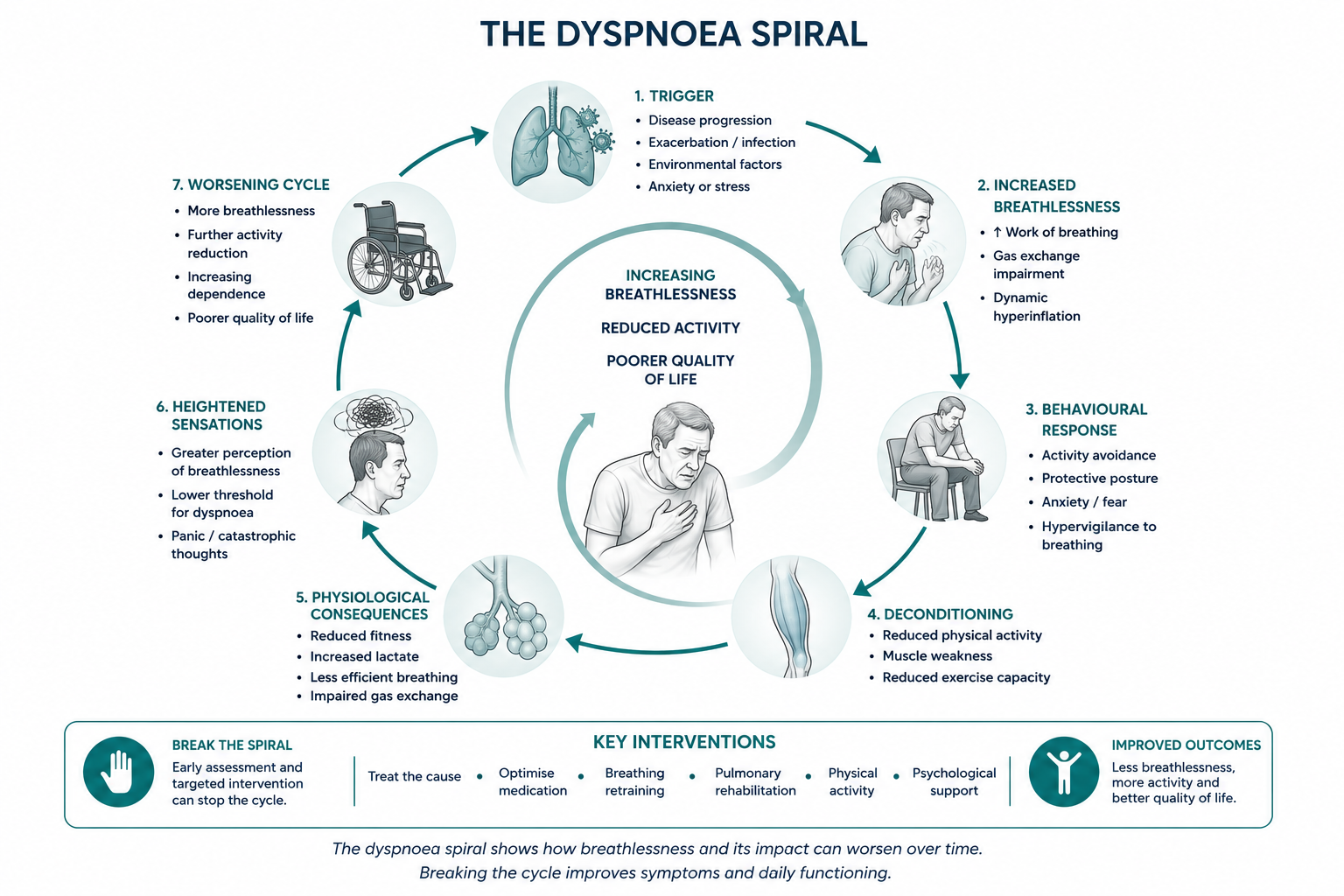
Recognising the spiral matters clinically, because much of the resulting disability is reversible. Breaking the cycle relies on graded exercise, breathing techniques and pacing — not rest — which is exactly what pulmonary rehabilitation delivers. See Decreased Exercise Tolerance and Cardiorespiratory Rehabilitation.
References & evidence base
- Parshall MB, Schwartzstein RM, Adams L, et al. An official American Thoracic Society statement: update on the mechanisms, assessment, and management of dyspnea. Am J Respir Crit Care Med 2012;185(4):435–452.
- Johnson MJ, Yorke J, Hansen-Flaschen J, et al. Towards an expert consensus to delineate a clinical syndrome of chronic breathlessness. Eur Respir J 2017;49(5):1602277.
- Bausewein C, Booth S, Gysels M, Higginson IJ. Non-pharmacological interventions for breathlessness in advanced stages of malignant and non-malignant diseases. Cochrane Database Syst Rev 2008;(2):CD005623.
- Swan F, Newey A, Bland M, et al. Airflow relieves chronic breathlessness in people with advanced disease: an exploratory systematic review and meta-analyses. Palliat Med 2019;33(6):618–633.
- Marciniuk DD, Goodridge D, Hernandez P, et al. Managing dyspnea in patients with advanced chronic obstructive pulmonary disease: a Canadian Thoracic Society clinical practice guideline. Can Respir J 2011;18(2):69–78.
References are numbered in citation order (Vancouver/BMJ style) and were current at the time of writing. Guidelines are living documents — verify against the latest version before clinical use.
More than one of our services applies here, and which combination suits you depends on what your assessment shows.
- Physiotherapy Assessment — your symptoms, breathing, exercise tolerance and daily function measured properly first
- Cardiorespiratory Rehabilitation — supervised exercise, breathing technique and self-management education
- Oxygen, NIV & Sleep Support — home oxygen and non-invasive ventilation set up, fitted and reviewed
Corrections: If something on this page is wrong, out of date or unclear, we want to know. Email reception@inspireclinic.au with the page name and what you believe is incorrect. Substantive corrections are made promptly, and the guide’s version and last-updated date are changed to reflect it.